9 Secrets for Getting Seniors to Be More Active

As an owner, administrator, or employee of a residential care facility for the elderly (RCFE), you want your residents to be physically healthy, mentally stimulated, and emotionally satisfied. That’s a tall order, and it’s always challenging for any size RCFE to meet residents’ individual needs in order to create a happy, viable community. 

Movement is crucial to a robust lifestyle, especially later in life. According to a CDC report “25% of Americans 65+ fall down and that falling is the leading cause of senior injury and death.”  Taking preventative measures like practicing balancing exercises and strength training help safeguard seniors from injury. 

Physical activity has the added benefit of improving mental health. Active seniors usually feel happier, sleep better, and are more mentally alert than those who are inactive.

senior walking activity

Provide a Positive Atmosphere for Activities

You will find it easier to get residents motivated and involved in physical activities and other pursuits if your staff is upbeat, welcoming, and exhibits a can-do attitude. Attracting the right RCFE employees in the first place makes this task much easier to execute.

Focus Staff Training on Encouraging Seniors

From assisted living classes for certification to your employee training, making certain techniques and strategies to increase the active participation of residents is a top priority. Staff members should be familiar with the needs of seniors and how seniors can be gently encouraged to participate in activities.

Emphasize the Need To Understand Residents

Although it takes time and effort, each RCFE administrator or staff member should learn about individual residents and find out what is important to them. While it’s impossible to remember everything, taking a moment or two each day provides new insights.

encourage active seniors

Create a Fun Facts Banner and Name Pin for Each Resident

A wall banner with the senior’s name and favorite activity, such as reading, yoga, or playing guitar, not only serves as a reminder to staff but also introduces the person to other residents. Likewise, a name pin with a phrase that indicates that an individual likes to read or take walks makes a great ice breaker in recreational areas.

Try These 9 Ways to Stimulate Participation

Even a small RCFE can offer a smorgasbord of physical and enjoyable activities to get residents moving and involved in new pursuits. As you look over this list, it’s important to remember that each senior is unique, and no activity will appeal to everyone.

1. Encourage Digital Photography

Residents can use a tablet, phone, or digital camera. You can conduct a class or furnish several basic photography books as resources. The seniors can print out their best efforts and hang them on the wall. Alternatively, teach them to store photos in the cloud where they can share them with family members and friends. 

Residents can enjoy the technical challenges such as composition or lighting, or they can record their particular interests by photographing flowers, birds, butterflies, or sunsets.

photography for seniors

2. Provide Gardening Opportunities

If your assisted living facility has room outside for flower beds or small vegetable plots, residents who maintained gardens in the past can enjoy bringing beauty and tasty produce to others. If outdoor endeavors aren’t possible, they can still maintain a few container plants in sunny communal areas or their rooms.

gardening activity seniors

Implement gardening classes (even for container gardening) where residents can learn how to make their plants thrive. The act of physically working with soil and the intellectual exercise of understanding how to keep plants alive is both physically and mentally stimulating.

3. Include Cooking Events

Both new and experienced cooks can enjoy interesting cuisines with different ingredients. From yeast dough to colorful salads, there is a dish to interest every palate. Choose a country or a theme for a special meal, and let each participant or a team of two make a dish.

4. Conduct Daily Steps Contests

For those who enjoy a little competition, monitoring steps get seniors moving.. Purchase some inexpensive pedometers and assign them to the participating residents. Post a chart with the competitors’ names, and see who achieves the most steps over a set period.

help seniors exercise

5. Sponsor a Little Free Library

With more than 150,000 Little Free Libraries worldwide, your residents can benefit in many ways from this project. They can help decorate the library box, solicit books from residents, staff, and family members, and keep an eye on the library to ensure a steady supply of books. Finally, they can read books exchanged in the library and hold book discussions.

6. Offer Nintendo Wii Experiences and More

These classic video games get older adults into action. Wii offers golf, tennis, and bowling for more physical activity. For newer gaming options consider introducing Minecraft to your residents. Post a chart with individual scores for those preferring to play alone or organize team competitions. Student volunteers could give the seniors tips.

7. Plan a Scavenger or Treasure Hunt

This activity gets even those with limited mobility up and moving. Provide participants with lists of items to obtain from staff members and other residents or hide items around the property for them to find.

8. Hold Holiday Parties for Neighborhood Kids

Sponsoring Christmas or Valentine’s Day parties can bring a lively event to your residents.

party ideas for seniors at RCFE

9. Develop Walking Maps to Explore the Neighborhood

Without a doubt, frequent walks offer many benefits for the seniors in your facility, and you want to encourage walking in every way possible. Creating simple neighborhood maps with routes of varying lengths provides a good way to get reluctant walkers started. Feature nearby parks, interesting buildings, and homes with beautiful landscaping and ask residents to add other ideas.

We Provide Support for Your RCFE

Whether you need RCFE staff training for new employees, RCFE continuing education for current workers, or help with how to start an assisted living facility, we offer state-approved learning opportunities and assistance. Peruse our convenient website or contact Assisted Living Education to receive immediate help with all your needs.

7 Ways To Attract Employees to Your RCFE

Finding and retaining dedicated caregivers has always presented challenges for administrators of Residential Care Facilities for the Elderly or RCFEs. Unfortunately, events of the past several years have contributed to a situation where the number of employment openings nationwide is greater than available job seekers to fill them.

In addition, unprecedented numbers of workers continue to quit their jobs to look for better opportunities and more job satisfaction elsewhere. If you are concerned about how these trends could affect your ability to hire caring, dedicated employees for an RCFE you own, manage or plan to open in California, this article offers some strategies you can implement to attract qualified caregivers for your assisted living residents. 

Revamp Your Hiring Approach

You may feel discouraged when you read employment statistics. Be aware that many potential employees want more from a position than just a paycheck. A position at a successful assisted living facility can offer more, such as making a difference in a senior’s life.

Don’t be afraid to emphasize this as you recruit new employees with these seven strategies.

1. Devote Sufficient Time To Find the Right Staff 

Hiring employees for an assisted living facility is a time-consuming process and requires a systematic approach. At a high level, the following steps cover the essentials of the hiring process:

  • Develop an accurate job description that communicates the desired skills needed to fill the position. Involving current employees in the crafting of job descriptions gives a more accurate account of what to include. Bonus tip for standing out to prospective employees: write an engaging overview about your facility that highlights the objectives of the RCFE and highlights why the position you’re filling is important. 


  • Post the job description on various online job boards. If you have a LinkedIn profile, post the opportunity there. Also, don’t forget to tap your existing social network for introductions to potential employees. 


  • Review applications as they come in and set aside those that are a match. Consider giving preference to those who have already taken assisted living courses


  • Interview candidates. A best practice is to prepare interview questions in advance. Asking applicants the same set of questions will allow you to compare their answers and help you to address points that are most important to your organization. 

Developing an organized hiring process can help locate the right workers for your RCFE, but be realistic about the time and effort needed to fill positions.

how to attract employees to an rcfe

Prepare for inevitable disappointments when prospects decline a job offer, change their minds or quit after working a day or two. Learn from any negative experiences and try to avoid similar situations in the future.

Taking the time to carefully hire employees will reward you with less turnover and more qualified employees.

2. Research What Is Most Important to Employees

While dissatisfaction with earnings often tops reasons workers give for quitting, other causes include little hope of moving up to a better position and a lack of respect for employees and their work efforts.

Getting input from your current RCFE employees can help on several levels. Whether you conduct informal conversations or ask workers to fill out a survey, you learn what they value in the workplace and demonstrate you take your employees’ opinions seriously. 

3. Consider Characteristics You Value in Your Caretakers

Before incorporating what you learn about employee values in your recruitment strategy, consider traits you desire in an ideal employee. Next, think about where you might find people who exhibit these qualities.

assisted living courses

If you listed patience as a valuable attribute, you might contemplate recruiting experienced parents, teacher aides, or people working in customer service at big box stores. Parents whose children are now in school or burned-out workers may be prepared to make a change.

4. Be Ready To Invest in Employee Certification and Training

When looking for a competent administrator to run your facility, you may select a candidate that needs to take the RCFE administrator course. When seeking to hire a caregiver, experience is helpful, but not required. All caregivers must have the California RCFE employee training regardless of past employment in another RCFE.

5. Create a Positive Atmosphere in Your RCFE

The lack of respect many employees feel in their workplaces presents a huge opportunity to set your assisted living facility apart from the competition. Creating a culture of respect, appreciation, and warmth for every person in your RCFE family goes a long way in keeping residents and staff happy.

attract employees for assisted living

Options for showing employee appreciation are endless. Some suggestions include:

  • Create a space for staff. Transform a lackluster break room into a full-fledged staff lounge. Include comfortable seating, snacks, charging ports for electronics, and other perks that give people an opportunity to decompress and re-energize. 


  • Give awards for a job well done. Be sure to involve residents in the selection and celebration of the awards.


  • Go public with your appreciation. Highlight exemplary employees on your social media accounts. 


  • Celebrate with your staff. Birthdays and other special occasions (or even non-special occasions like “yay Tuesday”) can be celebrated as a team. 

Showing respect and appreciation begins with the RCFE administrator setting the example and expecting employees to respect and appreciate each other as well.

6. Keep the Application Process Simple

Finally, once you have made your facility as satisfying a place to work as possible, streamline the initial application and interview process.

Being available to do an interview when a potential candidate comes by to complete an application, may save you both time later on.

rcfe administrator course

Since many job seekers fill out several applications at the same time, it is important to meet them as soon as possible, talk over their needs and goals to see if they are a good fit, and pursue the next steps if you want them on your team.

7. Make Every Interview a Win-Win

While interviewing applicants before fully vetting their credentials may seem tedious, it is worth the effort. If the candidate is a good match for your facility, you can move forward before another employer snatches the worker up.

You can listen and learn about workers’ values from the applicants. You can also share information about assisted living opportunities and your facility in particular.

Work With an Experienced Training Program

Whether you are hiring an administrator or caregivers, you need a quality vendor to provide administrator certification courses and staff training. 

Assisted Living Education can assist your facility in meeting your regulatory compliance issues such as staff training, Regulation update subscription service, and consultation services

Please contact Assisted Living Education for more information.

People Also Ask

What should I look for in an RCFE administrator program? Whether you’re looking for yourself or your team members, choosing an approved provider of RCFE classes is only the first step in evaluating a program. Here’s what to look for in an RCFE administrator program

6 Tips for Taking RCFE Classes Online

Taking all or part of your Residential Care for the Elderly (RCFE) certification and continuing education classes in an online format provides many advantages over in-person classes. You can save commuting time and costs while a flexible class schedule works around employment and family obligations.

Many students, however, may harbor some misconceptions about online RCFE CEUs and other virtual RCFE classes. Instructors teach these courses with the same vigor and rigorous requirements as in-person training. Not only are the teachers just as qualified and experienced, but the students are also expected to complete the same assignments and competency requirements as a traditional class. 

With the onset of the Covid-19 pandemic, many in-person activities have pivoted to online – the assisted living industry is no exception.  For the RCFE initial certification class, the California Department of Social Services (DSS) has temporarily allowed the 60-hour live class portion to be Live Streamed (Webinar) on Zoom due to COVID restrictions. This temporary allowance will expire on June 30, 2022. 

online rcfe course

No matter how many useful methods you employ for online class success, the most important factor involves making the best use of the study time you have and focusing completely on your materials. This article provides a number of strategies to help you learn, think and master the online portion of your RCFE administrator course or any online class.

6 Ways To Improve Your Online RCFE Administrator Course Outcomes

All online students are unique with individual strengths, advantages and challenges. Use the tips that best apply to your situation. 

1. Understand Your Course and Approach It With the Right Mindset

Once you enroll in an online class, carefully read the course syllabus and make note of the goals, reading assignments, and video homework. Treat the requirements with the same dedication you would give an in-person class or a work project and expect a positive experience.

2. Organize Your Space and Your Pace

If you already have a quiet corner or desk space, make sure to utilize it for your study time. Keep your computer or tablet and course resources at hand. Turn off your phone and social media notifications and avoid as many distractions as possible.

Not everyone has a dedicated study space, so you may need to think outside the box to set up a workspace. You might also consider studying at a public library or quiet corner of a coffee shop as long as it offers internet connectivity.

studying for RCFE exam

Although online classes allow you to study anytime, following a schedule makes a huge difference. Even if family responsibilities make regular study times difficult, a tentative framework helps keep you on track.

3. Connect Your Study Tasks to Your Future Work

During your review of course materials, try to connect the information to your upcoming work in an assisted living facility. As your instructor relates experiences, think about your own elderly relatives or acquaintances and how strategies might apply to them. Associating what you learn with real-life situations helps you to reinforce the information that’s being presented to you. As you advance in your classes, be cognizant of the qualities that make a good assisted living administrator.

4. Utilize All Textbooks, Videos, and Supplementary Materials

All Assisted Living Education  RCFE classes are designed to meet the requirements of the California Department of Social Services. The course videos, textbooks, and additional materials are carefully developed for a quality experience. Additionally, course materials from state-approved vendors, like Assisted Living Education, assure you that the course includes everything you need to know to pass RCFE initial certification classes or RCFE CEUs. Completing all assignments associated with these resources is vital to success. 

Online courses typically include a virtual textbook and other materials. If you prefer using printed information, however, you may want to invest in a hard copy of the textbook or print some of the other handouts so you can make notes in the margins and highlight information.

5. Participate in Discussions

If you are new to online learning, the discussion area set up by the instructor may seem a little intimidating at first, but it is another essential element of your class success. During instruction through Zoom, the chat function is available to students for questions and comments. Therefore, prepping questions in advance of class will give you an opportunity to contemplate the coursework more thoroughly. Questions and comments from fellow classmates may also aid in giving you a different perspective on the material. 

The online format allows students and instructors to maximize their time. Each participant has the opportunity to post in chat, and it avoids one or two individuals dominating the conversation.

6. Review Periodically

Before you begin each study session, take a few minutes to review any notes and materials from what was covered previously. This reinforces the concepts and may help you relate them to the new material presented. Consider preparing questions for your instructor in advance. 

If you are taking the RCFE administrator course, there are practice test questions for RCFE classes that will help prepare you for the RCFE administrator exam. The questions are similar to those in the exam and will help you pinpoint areas for further review. ALE provides a test prep as part of the online learning classes free to our students of the Initial Administrator Course. 

Succeed With Online Classes

Virtual courses can make it possible to fit the RCFE administrator course, required RCFE CEUs, or other RCFE classes into a hectic work and family schedule. By taking practical measures to focus on the instruction and avoid distractions, you can complete your courses and reach your assisted living career goals.

If you need help finding appropriate online RCFE certification and CEU classes, contact us at Assisted Living Education. We are here to support you on every step of your career path.

About Assisted Living Education (ALE):

ALE is an approved Initial Certification Training Program vendor in the state of California. Our instructors have extensive experience in RCFE Certification Training and RCFE Continuing Education. Are you thinking of operating your own assisted living facility? ALE provides RCFE Licensing assistance and RCFE Consulting Services. We have a proven track record of preparing RCFE owners and their employees for a career in assisted living. 

People Also Ask:

How do I get an RCFE license? A certified RCFE administrator must be at least 21 years old and have completed high school or acquired a GED. Additionally, you must complete the 80-hour RCFE Certification class and pass the California State exam. A background check is required. The application for the RCFE certificate is $100. 

Creating a Better Living Environment for Residents

There’s a lot of psychology that goes into the design of marketing products and store layouts. Drawing the consumer’s attention to different products at various shelving levels, or placing cheap, tempting items close to the register creates “impulse buys.” Every product in the store has been designed and marketed to persuade your buying behavior.

A similar approach can be used in assisted living or other facilities which provide services to seniors, especially in memory care. Instead of inspiring residents to make purchases, carefully planned decor can make residents feel more comfortable and safe in their surroundings.

In the past, many facilities had used bland colors, similar to what you would find in a hospital. These neutral colors were thought to be non-offensive and less distracting, which they were, but sometimes tended toward bland. However, recent changes have been implemented in some memory care facilities that move away from mundane decor and create environments that residents enjoy living in.

This doesn’t mean that anything goes; different designers have taken care in their choices of decor, including choosing colors and patterns that are not overly stimulating.

Mindful Designs

Designs for assisted living facilities should keep their main functional goals in mind, but there’s still plenty of room to add custom touches as well.

The design of common rooms should be open to flexibility, to accommodate different activities, gatherings, and special events like holiday parties or guest musicians.  These areas can also help build a bridge between the facility and the community, as an inviting space to bring in volunteers to engage with residents, put on performances, or other unique occasions.

At the same time, while it is nice to be able to rearrange furniture, it is useful for residents if those rearrangements are kept to a minimum, especially for those with cognitive or memory issues. Maintaining a familiar space can help avoid confusion, and even trips or falls.

Less is always more, especially in an assisted living environment. Rooms and common spaces should be clutter-free to help keep clear pathways and also reduce fall risks.

Color Coordinating

Attributes of the actual decor can also evoke positive (or negative) feelings and associations. Natural colors or colors associated with nature (brown/wood, green/foliage, yellow/earthy) are warmer and friendlier, while blues and grays tend to be cooler yet sophisticated.

Another thing to consider in color choice is that color/vision also tends to change as we age. Seniors see more yellow, and gray is often a common color used in institutional settings. It’s suggested that using greens and yellows can help enhance colors in seniors’ vision.

Bold or dramatic patterns are not typically the best for residents in an assisted living situation, as they may be overly stimulating. Subtle patterns, accent colors, and gentle contrasts are useful, however, and can help denote a transition or border from one room to the next.

Natural Lighting Benefits Everyone

When possible, take advantage of natural daylight to brighten a room. Not only is it ‘friendlier,’ but it can physiologically help residents stick to a regular sleep cycle. Exposure to natural light could potentially increase exposure to Vitamin D, which encourages muscle movement, cell growth regulation, and helps the body absorb calcium – a crucial benefit in the fight against osteoporosis.

better environment for seniors

Using more natural light is also a cost-cutter in terms of electricity, a  financial benefit to the facility as well – a benefit everyone can enjoy!

A Home Environment

Sticking to warm or lively colors can make the facility look friendlier and more like home, which can have a positive effect on residents and their families alike. An inviting color palette can help the environment feel less institutionalized and more personal and therefore comforting.

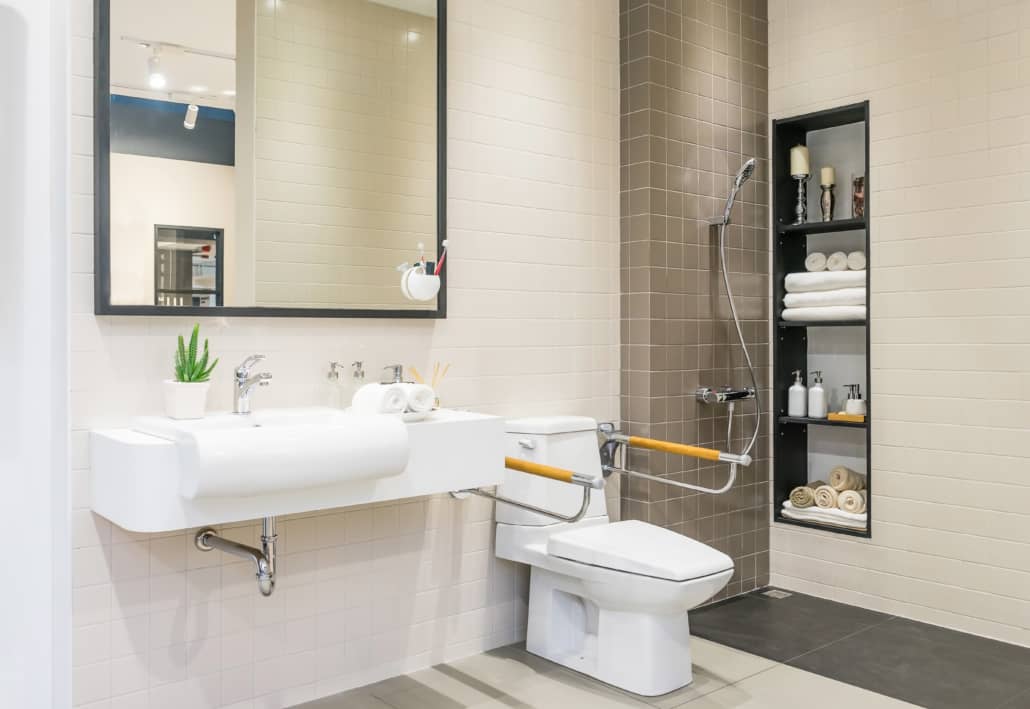
Age-friendly materials like anti-skid flooring, safe stairs, and accessible baths contribute to the ability of residents to feel at ease within their environment. 

For example, furniture should be comfy, but not too comfy; extra cushy chairs can be difficult for residents to climb out of. Firmer, supportive chairs at an appropriate height would be better suited. Armrests should not be too high so the resident can use them comfortably to rise from a seated position.

Connect with the Great Outdoors

Outdoor areas can work in harmony with the rest of the facility. Properly designed outdoor areas will extend functionality and provide a variety of experiences for residents, guests, and staff. The positive effects of outdoor exposure include stress reduction and healthy exposure to natural light and air.  Create outdoor wellness areas that function as their own rooms. Examples include: 

  • Fitness stations to promote exercise
  • Lawn areas for outdoor activities like yoga, Tai Chi, or Bocce ball. A putting green could be incorporated as well. 
  • Outdoor gathering areas with fire pits, comfortable seating, and pleasant landscaping
  • Wide, flat trails for walking and socialization
  • Community gardens for residents to grow their own food or flowers
  • Outdoor amphitheaters create a space for outdoor entertainment like movie nights or plays 

Create Spaces for Staff

Residents benefit from consistent care, especially from people they are familiar with. Additionally, with the onset of Covid, staff shortages are commonplace. Staff retention is more important than ever! 

Invest in making your staff feel comfortable and appreciated. Staff lounges are a great place to start. For example, an outdoor patio for staff use can help people decompress during breaks. Within the staff lounge area, consider adding charging ports for electronics, a recliner, or a snack center in addition to the usual dining table and chairs.

People Also Ask

How can I make my RCFE eco-friendly? There are several green building initiatives for RCFEs that can simultaneously improve the lives of residents and help the environment. 

_________

Assisted Living Education is a premier provider of classroom-based and online coursework for professionals in assisted living. We offer RCFE Administrator Certification Training, RCFE licensing, continuing education, and consulting in specific areas like compliance, staff training and licensing. Please visit our contact page to reach us for any inquiries.


Important Things To Look for in an RCFE Administrator Program

Every journey requires a map to reach your destination with as few detours as possible. As you begin your exciting venture to receive your residential care for the elderly (RCFE) administrator certification, California’s RCFE administrator program can help you map the way to reach your goal.

Whether you’re pursuing certification to open your own licensed RCFE or to run an established assisted living facility, you need to complete the RCFE administrator program because this is a requirement in California.

An RCFE Certificate of Completion for the class qualifies you to take the 100-question RCFE Administrator Certification Examination. The exam is 100 questions, timed at 2 hours, open book and you must pass with a score of 70%. The exam costs $100. 

Once you pass the exam, you must submit an application and a fee of $110. During the Assisted Living Education (ALE) administrator course, the instructors will cover all the requirements for preparing for the exam and assist you with the paperwork required for the application submission.

The class training and information help you answer exam questions to pass the test and complete the application to receive the California RCFE Administrator certificate. The knowledge, advice, and experience gained through the course will guide your daily operations of an assisted living facility.

Choosing the ideal course becomes a vital first step on this journey, but how do you find the right program for your needs? 

Discover the essential factors to consider as you evaluate RCFE classes.

Make Sure the RCFE Administrator Program is State Approved

In California, oversight for all community care facilities, including senior care, is assigned to the Community Care Licensing Division of the California Department of Social Services. The CCLD administers the RCFE licensing to open an assisted living facility.

Approval of course outlines and regulation of vendors for the RCFE administrator program and RCFE classes is under the jurisdiction of the Department of Social Services, Administrator Certification Section

Choosing RCFE Administrator Program

Taking training from a vendor not on the list of approved Initial Certification Training Program Vendors creates a huge roadblock on your journey. The state will not accept your course completion certificate or allow you to take the administrator certification exam, and you will likely end up having to take — and pay for — another course that is approved by the DSS.

Check the Class Logistics

Qualities that set apart a class and enhance learning do not include organizational details. However, class locations or webinar times, tuition, book or material prices, refund, and make-up policies can lead to a detour in your plans.

Check the vendors’ websites for course schedules and carefully note exactly what is included in the price. Make sure you understand the consequences of arriving late or missing a class or webinar and write down cancellation deadlines.

State requirements for the course include 20 hours of online classes and 60 hours of live training. In response to COVID restrictions, the Department of Social Services determined that course providers could teach the 60-hour portion of the class using live-streamed webinars through June 30, 2022. Therefore, unless the DSS provides an extension, in-person classes should resume after this date.

Review Course Outlines and Instructional Materials

All RCFE Initial Certification Training Program vendors must follow the Administrator Certification Section Core of Knowledge Training Standards and submit course outlines for DSS approval. The Title 22 California Code of Regulations is an important reference used in the 80-hour course.

Although California sets the overall training curriculum, individual vendors develop their own course guides and supplemental materials. 

choosing an rcfe administrator program

Ask specific questions about the text and handouts used in the class before registering. If possible, ask administrators who completed the class about the clarity and usefulness of the materials for training, exam preparation, and later reference when working in the field.

Ask About Class Size

Whether the 60-hour portion of the administrator training is taught in person or through webinars, the number of students enrolled makes a difference. If the vendor puts too many students in the class, you may not get a chance to ask questions and participate in discussions. If too few individuals attend, a helpful exchange of ideas may lag.

Evaluate the Instructional Staff

The teacher sets the tone for the class and can make the difference between a vibrant, upbeat experience with everyone participating or a dull, uninspired presentation of regulations and dry facts. Ask about the faculty member’s background and verify past experience as a working RCFE administrator in several different facilities.

A good instructor sprinkles stories of situations and challenges encountered over the years and gets the students involved with solutions. Look at online reviews and testimonials of former students to check out the level of teacher engagement with the students.

Remember the Most Important Factor Is You

Course schedules, practical handouts, and a stellar instructor all contribute to an amazing classroom experience, but in the end, you are the person responsible for getting everything you can out of the RCFE administrator program. To reach your goal and become a certified administrator — and perhaps receive RCFE licensure of your facility — you need to choose the right course and make the most of the opportunity.

We’re Here To Guide You

It may seem like a long journey, but the helpful experts at Assisted Living Education want to help you reach your destination. 

Contact us today if you have questions or need advice about taking that first step.

People Also Ask: 

How much do RCFE administrators make? Salary ranges vary for RCFE administrators. In California, the average salary for an RCFE is around $45,000. Salaries in the higher end for this role usually depend on a number of factors like the size of the facility, an individual’s experience, or education.

About ALE:

Assisted Living Education (ALE)  is an approved Initial Certification Training Program vendor in the state of California. We provide comprehensive RCFE Certification Training, RCFE Continuing Education, RCFE Licensing assistance, and RCFE Consulting Services. With many years of real-world experience, our instructors will prepare you or your employees for a rewarding career in assisted living. 

6 Steps for a Successful RCFE

Starting your first Resident Care Facility for the Elderly or RCFE can be exciting, fulfilling and daunting all at the same time. Between securing a location and getting your RCFE administrator certifications it can be easy to overlook some of the important basic ideas that will help ensure your first RCFE is a success.

What is an RCFE? 

The RCFE model exists only in California. You may hear them referred to as care homes, residential care, rest homes, or assisted living facilities. The care provided at these facilities is for people over 60 who require assistance but not 24-hour care. 

An RCFE provides lodging as well as assistance with activities of daily living such as personal care, hygiene, dressing, eating, medications, etc. RCFEs are considered non-medical and therefore are not required to have medical staff on site. Think of an RCFE as something between independent living and 24-hour nursing care.

Get Information from Trusted Sources

Over the years, we have worked with hundreds of newly minted RCFE administrators to make sure their facilities, policies and business strategies are setting them, and their residents up for the best possible experience. In that time, we’ve learned a thing or two (or six) on some of the foundational elements of what makes a successful RCFE. Here is what we would say our 6 most important tips for building a successful RCFE facility are…

1. Spend Time Creating Your Team

More than just a team, you are creating a professional business culture, and where that culture starts is with you and your employees. Those first several hires are vital to any new venture, regardless of the industry, and especially in a care-oriented industry like this one. The people you choose and the personalities they bring set the tone and precedent for all that is to come. Get a firm understanding of what makes a good assisted living administrator and carry those qualities over to your team.

With everything in flux, you might be tempted to “fire drill” the hiring process in a rush to hit the ground running. This is never a good idea. We’ve all heard the phrase beggars can’t be choosers. In hiring, no matter the circumstances, that should never apply. Give yourself permission to spend time creating your team. Yes, your team. You have a vision, and it is okay to be selective on who will join you on your path to seeing it through.

2. Choose Your Residents Wisely

Just as you are creating a culture with your first employees, so are you building an RCFE community. Your first resident is your benchmark and will set the tone for your community in ways you might not expect. For example, if your first resident has Alzheimer’s and has repetition tendencies, then it might be difficult to admit residents who are cognitively with it.

Remember, just as you have a choice, so do your residents — and there are a lot of factors that go into their decision if they choose your RCFE facility. As facilities grow in size, culture and community are becoming increasingly important. If a resident-to-be doesn’t see a community they can engage with (even if one exists), they might very well pass on your community. Whether it’s bound in fact or not, perception is reality.

3. Know All of Your State’s Regulations, Codes, and Policies — And Comply with Them

These laws exist for a reason, both for the protection of your residents and for yours. The quickest way to have your community shuttered is to be out of compliance with your state’s RCFE regulations. That also means current administrators need to stay current by attending  RCFE continuing education classes. You went into caregiving to do just that:  give care. How can you adequately do that if you’re out of compliance, or don’t even know what codes and policies your community is supposed to be complying with?

Moreover, having a firm grasp of your state’s regulations could very well be crucial down the line. Don’t be afraid to wield them like a shield — the first line of defense towards any future liability claims.

Need to brush up on your policy? Stay up to date by joining a subscription service for Provider Information Notices (PINs). Health and Safety Code (H&S) code1569.155 requires California RCFEs to subscribe to such a service..

4. Communicate Regularly

Not only is communication vital so that everyone on your team can always be on the same page, but it’s also a regulatory requirement. The law mandates that any change of condition in the resident — say, they have a urinary tract infection or they’re more confused than usual — must be communicated to their physician and responsible party (i.e. a family member), if any.

This makes sense, of course. A change in an individual’s condition can have life or death consequences, and a lapse in communication could prevent a resident from receiving critical treatment. 

Shift changes present a particular challenge in this regard. There’s a potential for information to get lost in the transition between your facility’s day and night teams. Certain symptoms, such as insomnia — a potential indicator and risk factor of depression — might only present themselves late in the evening, so it’s imperative everyone is kept in the loop, and that changes are noted in writing.

Let’s not forget your duty as a certified RCFE Administrator to maintain communication with your state licensing entity. Any time a resident experiences an unusual incident — such as a fall, an injury, or a medical emergency requiring a trip out to the hospital — a report must be made to your Licensing Program Analyst at the Department of Social Services(DSS) with within 1 business day via telephone, and within 7 days via a written report. This takes us to our next tip.

5. Document, Document, Document

Any time there is a resident incident, such as a fall, it must be documented — either internally, if it isn’t that serious, or on a State-provided form to be submitted to the DSS if you called 911 or something similar. Like the above, incidents need to be reported to the resident’s physician and responsible party, and it’s best to do this in writing so you have a paper trail.

Liability, though you might not want to think about it, should always be a concern. Thus, it’s wise to perform internal audits and random record reviews on a routine basis. You always want to be able to certify compliance if the need arises. This is where the term “defensive documentation” comes into play. When you document incidents, or anything really, specificity, precision, and descriptive detail are all musts.

Resident personnel, and administrative records—must be secured in a HIPAA compliant manner. What does this mean? Records should be kept locked. Employees should not have access to administrative or personnel records. Families cannot have access to resident records without consent or a record release form. Computers must be password protected, on an intranet and passwords change every 45-60 days. As a guideline, take a look at the list of documents and records that must be kept at residential care facilities in California. Remember that every state is different, so unless your facility is located in California, what you are required to retain might be different.

6. Don’t Be Afraid to Say No

The words “this is my island” spring to mind. This facility is yours, and as an RCFE Administrator, you cannot be afraid to say no. We covered this in part in Tips #1 and #2, what to do in the beginning, but there’s a corollary on the other end of the spectrum:  what to do when an end is inevitable.

If an employee misbehaves, routinely underperforms, or puts your residents or facility in any modicum of risk (health, liability, or otherwise), then it is your duty to terminate them promptly. With the safety and wellbeing of those in your care on the line, they must be your first primary concern.

But what if an individual’s medical needs exceed your facility’s abilities?

It’s sad to say, but this is a quandary you will likely face dealing with residents suffering from advanced Alzheimer’s and dementia. Much as you might want to keep them in your care, your license might not permit it. The care they require might go beyond the scope of what you can supply. In these situations, or in cases of residents who exhibit violent behaviors or a flagrant disregard for community rules, letting go of a resident might be a necessary course of action as well.

The Essential Component of Success

Looking back on the six tips we just shared, you might notice that at their core they are all about the same thing: care. 

Caring enough to do things right. Providing the best care. 

Take time to assure your level of care by maintaining compliance and communication. 

Although there is a lot more to running a successful RCFEcommunity than just these 6 things, mastery of these will give you a great foundation to build your business on. In the event that you need additional support or training, the experts here at Assisted Living Education are always here to lend a hand.

Assisted Living Education is the premier provider of RCFE certification, RCFE classes, licensing, products and services for assisted living. Our teachers are industry professionals with many years of experience that are engaging, entertaining and highly informative. We offer RCFE consulting services and share real RCFE experience that will help you be successful in this fast-growing career industry.

What Makes a Good Assisted Living Administrator?

The continued growth of the retirement-age population in the U.S. is fueling the demand for assisted living facilities and the administrators and caregivers needed to run them. 

Few jobs can provide more fulfillment than helping aging seniors maintain their independence and zest for life. The U.S. Census Bureau stated in June 2020 that the number of people in the country who are 65 and older increased by more than a third in the last ten years.

Great assisted living administrators are passionate about providing important services to seniors in need of assistance with day-to-day activities or medical care. They have a deep concern for people’s well-being and happiness.

Additionally, people who are looking for professional growth opportunities, a favorable employment outlook, and high job satisfaction are attracted to this role. 

As the need for assisted living facilities continues to develop, the opportunities for an RCFE administrator career and other employment will also increase. The California Department of Social Services reports that the state currently has more than 7,400 licensed Residential Care Facilities for the Elderly and this number is expected to continue to grow. 

Could You Be a Part of This Expanding Career Field?

If you are looking for an employment opportunity that gives you personal satisfaction along with the chance to make a big difference in the lives of other people, take a close look at a career as an RCFE administrator

California provides a clear path to receiving your assisted living administrator certification, and with the variety of RCFE sizes and care models, you can surely find the right fit in this expanding field.

People often wonder if they are cut out for this type of career, so we have put together a list of hard and soft skills, personal traits, and necessary training that help lead to success in this high-demand profession.

What Are the Necessary Skills and Traits for an Assisted Living Administrator?

As you read through this list, don’t become discouraged if you feel you lack competence in any area. In many cases, you can learn skills or improve personal traits by taking RCFE classes or gaining experience working as a caregiver with the elderly. 


Start slowly by learning one new skill at a time and don’t be afraid to ask for advice from others who work in the field.

The California Department of Social Services has these basic qualifications for an administrator: having a good character and a continuing reputation of personal integrity; A high school diploma or equivalent such as a GED; at least 21 years of age.

Other requirements are covered below.

1. Business Operations Knowledge

This is foundational to the assisted living administrator skills required because, in spite of its noble purpose, an RCFE is a business. 

RCFEs must be financially sound in order to provide a caring and stimulating atmosphere for residents, support staff, and carry out daily goals for residents such as providing nutritious meals and energizing activities.

Some of the business knowledge needed to run and RCFE may include:

  • Setting up a budget
  • Keeping financial accounts current
  • Maintaining resident records
  • Interviewing, hiring, and supervising staff
  • Complying with state regulations
  • Marketing the facility and conducting tours
  • Overseeing food service
  • Organizing people, schedules, and countless details


Don’t panic at the thought of handling all these business responsibilities. 

If you begin as an administrator at a small facility, the duties may not be as rigorous as they sound, and you can gain expertise with time. 

You will also receive thorough training in these areas when you complete the assisted living administrator certification training required for licensure.

2. Communication Skills

Excellent communication skills are important in any career, but high-level skills are needed by the assisted living administrator to interact with different groups of people:

  • Residents
  • Family members
  • Staff
  • Regulatory agents
  • Community members

Administrators often utilize a slightly different approach with each type of group, but all written and verbal communications should be friendly, respectful, and easy to understand.

3. Listening Ability

Although good listening skills are part of communicating with others, they are so important for an RCFE administrator that we are listing this strength separately. Unless you learn to listen with your ears, eyes, and intuition, you can miss so much of what others are telling you.

Taking time to listen to residents shows respect, uplifts their spirits, and often gives you advance warning of issues such as depression or health changes. 

Listening to the concerns of staff members provides valuable insights into what is working and where improvements are needed. Giving attention to anyone who approaches you with an issue should always receive top priority.


4. Empathy and Compassion

When you put yourself in another person’s shoes and see things from that individual’s perspective, you can develop compassion for what they are experiencing. Whether the administrator is dealing with an unhappy resident, concerned family member, or a frustrated employee, showing understanding and kindness is always the right approach.

These personal qualities should be exhibited by everyone at the RCFE, and it is up to the administrator to emphasize the traits and help others develop them. 

Just as it is important to understand how employees may sometimes feel overwhelmed by difficult situations, an effective administrator helps staff members recognize why a resident may be acting out and how to approach the situation with compassion.

5. Integrity and a Sense of Responsibility

Not only are assisted living administrators accountable for the health and safety of the residents, but they also help determine the culture and mood of the facility by the way they carry out their daily duties and interactions. An effective administrator remembers this and approaches everything they do with sincerity and the good of the residents and staff in mind.


How Can You Get Started in This Amazing Career?

Very few careers are filled with so many rewards as working as an assisted living administrator, and the need for more facilities and managers grows each year.

Assisted living administrators must be forward-thinking, compassionate, organized, reliable, and patient. They must have the ability to balance budgets, meet strict state requirements for assisted living facilities and possess in-depth knowledge of assisted living services.

While the skills and qualities required for the position are extensive, they can be mastered through RCFE classes and the assisted living administrator certification course needed to obtain a California certificate to work as an RCFE administrator.

If you are ready to explore the possibilities of an assisted living administrator career, contact us today.


7 Ways to Improve a Senior’s Memory

A senior’s memory function is a quality of life issue for both the senior and their family. 

Of all the joys that come with preparing meals, leading activities, and encouraging independence, perhaps nothing comes close to the gratification received when a resident shows progress with memory skills. 

As administrators and employees, we carry out many activities each day to enrich the lives of seniors living under our care. 

Residential care facilities for the elderly (RCFE’s) are often where seniors experiencing memory issues end up as they need the extra help with activities of daily living or ADL’s.

As an RCFE administrator, it is important to understand what memory loss can mean to seniors and their families. While no two seniors are the same, memory changes are also different for each individual. As an RCFE administrator, it is your responsibility to provide an environment where residents can continue to function as an individual yet receive assistance from qualified staff as needed.

There are many effective measures RCFE administrators and staff members can take to help enhance the memory abilities of their residents. 

These actions are not complicated and in fact, build on many things you are already doing to make your seniors’ lives more rewarding.

As you help residents with their cognitive health, brain health, remember to focus on their interests and allow them to retain as much independence as possible in the process. 

Strategies for Addressing Memory Issues in an Assisted Living Facility

Most of the approaches to helping seniors boost memory involve the areas of physical health, learning activities, social pursuits, and positive attitudes. 

An assisted living community provides a great opportunity for the RCFE administrator to implement measures that promote memory enhancement since most facilities already address nutrition, exercise, activities, and social opportunities in the current programming. 

Here are seven ways you can help provide memory retention in your community:  

  1. Offer meals that are both tasty and healthy

When you pursued assisted living certification, you learned how to plan menus and prepare delicious meals that meet the nutritional needs of the residents. 

According to the Mayo Clinic, many vegetables and fruits, healthy fats, and herbs can help maximize memory as well as contribute to physical health. Your seniors can also enjoy sampling tasty new options as the seasons change.

  1. Provide multiple ways for residents to ditch their sedentary lifestyle and become more mobile

Many seniors residing in a California RCFE already participate in daily exercise that can help improve memory. These residents tend to appreciate things like organized exercise classes and outdoor walks. Indoor activities such as easy yoga classes are also enjoyable for beginners and those that prefer not to go outside. 

The seniors at your facility may have played golf, tennis, or even basketball in their younger years. 

Think of ways to rekindle their love of sports with croquet, corn hole, or free-throw contests. Yard games, group walks, or park activities provide excellent methods to get everyone involved, especially those who tend to just sit in a chair most of the time.

  1. Help everyone get adequate sleep

Many researchers agree that an adequate night’s sleep is vital to an older individual’s memory and recall process. Think about how much easier learning a new skill or studying for online assisted living administrator courses becomes when you get an uninterrupted night of sleep. The same is true for the residents of your RCFE who want to learn new information.

While you can’t magically develop better sleep habits for your seniors or force them to make changes, you can encourage them the same ways you would introduce any new activity:

  • Schedule a short talk about sleep issues, perhaps bringing in a nurse or sleep professional.
  • Show an entertaining group video about improving sleep.
  • Provide handouts for residents to voluntarily track sleep progress and then meet as a group to discuss progress together.
  • Plan an activity for seniors to make easy changes to their rooms, such as eliminating any blue lights, that can help with quality sleep.
  1. Encourage proactive memory prompts

Most people make good use of calendars, planners, and lists of things they want to accomplish. When seniors retire or downsize to a new residence, however, they sometimes stop making use of these memory helpers. 

One simple activity is to review how these aids can help, as well as introduce digital versions for smartphones, tablets, or computers.

  1. Plan learning activities

The more residents you serve in your facility, the greater the diversity of interests and skills. Whether you work one on one with your seniors or in groups, try to offer a variety of fun learning opportunities:

  • Courses, such as learning to speak a new language or play a recorder
  • Hobbies of every type, from easy model-building to crocheting or drawing
  • Group singing and learning new songs
  • Cooking skills and discovering new recipes
  • Individual or group puzzle-solving, such as jigsaw puzzles, word searches, or Sudoku
  1. Encourage social opportunities and pursuits

The need for socializing varies with each individual senior, but making friends and interacting with others generally improves the quality of life and encourages memories. Residents who are shy may prefer small groups.

While seniors may not have the social opportunities they normally would due to COVID-19 restrictions, activities like reading, word searches, puzzles, journaling, coloring, and crafts are all great person-centered activities that can keep the mind stimulated. Additional activities include: 

  • Book clubs and card clubs
  • Volunteering at churches, food pantries, or museums
  • Knitting circles or whittling clubs
  • Field trips
  1. Develop a positive, relaxing environment

Attitude is everything when it comes to memory skills. Looking on the bright side not only makes life more pleasant but can also help prevent stress-induced memory loss. When seniors become anxious or stressed, the body causes cortisol levels to surge, resulting in memory deterioration as they age.

Everyone can use reminders to express positive feelings and encourage others, and staff training is a good place to begin. 

Hang inspirational posters in community areas, and if space is available, set aside a quiet room or corner space for private moments. Playing low-volume, calming music during meals or at special times can also be helpful.

Share the Joy of Sharpening a Senior’s Memory

An assisted living community provides the ideal environment to promote memory care through healthy lifestyles, new experiences, mental activities, and social opportunities. 

While these strategies cannot solve all memory issues, they may boost some memory skills and add meaning to the daily lives of your residents.

If you would like to learn more about assisted living administrator certification or our online assisted living administrator courses, contact us today.

People Also Ask: 

Is it normal for a senior to be forgetful? 

Lapses in memory could be considered a normal part of aging. There are many changes that happen to all parts of the body as people age. Age-related memory changes can be one of them. 

What’s the Difference Between an RCFE and an SNF?

As an assisted living administrator, you are in a position to educate families about the different senior care options.

Families considering options for loved ones will appreciate a simple explanation of the types of facilities available to them. Demonstrate your value early on in the process by helping families navigate this complex decision. 

Additionally, you and your staff can avoid costly mistakes like admitting a resident that may really belong in a SNF. Share this handy post with potential residents so they can make informed decisions. 

Californians care about each other, and the Golden State does everything possible to provide for all its residents at every stage of their lives. This certainly includes the aging process and issues that may develop as personal strength, mental understanding, and physical health decline.

When people start finding daily activities a challenge, whether cooking, keeping up their home, or even bathing and dressing, they have a number of options for assistance. 

The facility choices are abundant, but names and acronyms make it difficult to distinguish the appropriate facility choice. 

RCFE vs SNF – A Closer Look

Let’s explore the difference between the two types of senior care facilities based on:

  • Function
  • Licensing
  • Atmosphere
  • Residents
  • Staff
  • Daily Life
  • Special Activities
  • Payment Options

Function

First off, the purpose at the heart of each of these facilities is quite distinct. The mission of the RCFE and the RCFE administrator revolves around keeping each resident as independent as feasible for as long as possible. 

By contrast, the state entrusts SNFs with providing professional medical services. To put it simply, an SNF is a medical facility, and an RCFE is not.

Licensing

Not surprisingly, California designates two different state agencies for oversight of these facilities. The California Department of Social Services regulates RCFEs, which include assisted living homes, memory care, and Continuing Care Retirement Communities. 

On the other hand, SNFs fall under the jurisdiction of the Department of Health Care Services.

The Department of Social Services has thorough application, testing, and inspection procedures in place for both the Assisted Living Facility license and the assisted living administrator certification. 

Since the process to obtain these licenses and certifications is complex, aspiring RCFE administrators should familiarize themselves with certification criteria, facility processes, and the RCFE corresponding terminology as early as possible.

Atmosphere

When you walk into an RCFE, you typically feel like you are entering a large family home with comfortable communal areas furnished like a living room:

  • Sofas or upholstered chairs
  • Appealing wall colors and pictures
  • Bookshelves and tables
  • Reading materials
  • Puzzles and games

Residents’ rooms are often private, and you may see seasonal decorations on the doors expressing the occupant’s individual taste.

Out of necessity, you may experience a more institutional feel in an SNF since appropriate medical equipment and staff stations are needed. In many facilities, rooms are shared by two patients although some may offer private quarters. Meals are served in dining areas for residents able to sit at the tables, but many occupants may eat meals in their rooms.

Residents

As a result of the purpose and limited services of an RCFE, the residents of these homes are typically capable of performing at least 2 or more ADLs (Activities of Daily Living). 

If you think of a spectrum extending from total independence to end-of-life care, an RCFE provides the first step in this progression. Each individual is different, but some may need assistance with personal hygiene or other ADLs. 

Since housekeeping and meals are generally included, residents no longer need to worry about these duties.

Most people who reside in an SNF, however, usually have medical needs and require 24-hour skilled nursing care with physician oversight on a monthly basis. Some occupants may have adequate mobility, others may need walkers or wheelchairs, and a number may be confined to their beds.

Staff

Since both types of facilities are under the umbrella of a state agency, staff must meet specific regulations.

All RCFE care staff need to complete specific training within the first four weeks on the job. 

The RCFE administrator must not only complete 80 hours of certification training for an assisted living administrator certificate but also must take continuing education courses. Online assisted living administrator courses ensure staff are trained according to state standards. Specific nursing degrees are not required for RCFE caregivers.

In general, SNFs must have a licensed vocational nurse on duty 24 hours a day while a registered nurse must be present for at least one eight-hour shift each day. Any particular medical services ordered, such as physical or occupational therapy, must be provided by certified therapists.

Daily Life

Since independence is highly valued in RCFE communities, the daily schedule of each resident may look different. In addition, many variations may exist from one RCFE to another. For example, some facilities may cater to persons of a particular religious faith or members of a certain cultural or ethnic group.

Residents have the freedom to choose their own interests and the ways they spend their days. 

Given California’s beautiful climate, many individuals may enjoy time outside whether sitting, walking, or perhaps tending to flower pots or small gardens. Others may prefer a communal room inside or their own private quarters.

Because of physical limitations, residents at an SNF may be limited to more specific routines that include time set aside for specific medical care or therapy sessions. As their capabilities allow, however, they can spend time in communal areas visiting or participating in group projects.

Special Activities

Because many RCFEs provide unique care settings, activities may also be specialized according to the interests, needs, and capabilities of the residents. 

Possibilities are endless, but some common opportunities are offered at many facilities:

  • Exercise classes
  • Book discussions
  • Bible studies
  • Craft projects
  • Group singing
  • Gardening opportunities
  • Shopping excursions
  • Field trips

Efforts are also made to engage residents at SNFs with activities and entertainment. 

When residents are unable to leave their rooms, special projects may be brought in for them to complete. Many SNFs also have volunteer programs to provide companionship and learning opportunities.

Payment Options

Another more major difference is how residents and patients pay for their care needs.  

Skilled nursing facilities are often enrolled as preferred providers for Medicare, Medicaid (Medi-Cal in California), and private insurance. Private pay is also accepted. Not all SNF’s have enrolled as Medicaid providers. These insurance plans do not pay for unlimited, long-term care nor do they pay for 100% of the hospital bill. Medicare typically pays for 100 days per year and a percentage of the charges.

RCFE’s however are not covered by most major medical insurance plans (not a medical model). Some Long-Term Care insurance policies do cover RCFE charges depending on the policy.

Conclusion

Although many differences exist between a Residential Care Facility for the Elderly and a Skilled Nursing Facility, they both provide excellent care for seniors at a particular stage of life. 

If you have questions about online assisted living administrator courses or need help preparing an application for an RCFE license, please contact us. 

Contact Assisted Living Education

People Also Ask

What are the 3 main types of long-term care facilities?

Residential care facility for the elderly, skilled nursing, and independent living.

What does an assisted living facility provide?

An RCFE provides home-like personal care and assistance for people who do not require skilled nursing care. 


How To Make Your RCFE Eco-Friendly

Green building initiatives have been around for more than 20 years, and now assisting living facilities are moving towards a new measure of sustainability. 

Given the move towards eco-friendly initiatives, it’s no surprise that RCFE administrators are looking for ways to actively promote sustainability in their communities. 

The impact of creating an eco-friendly assisted living community is twofold.  First, it helps to reduce a facility’s carbon footprint. Second, it promotes both mental and physical wellness for the residents. 

As an RCFE Administrator, you work hard to provide a warm, safe and caring atmosphere for your residents. In return, you and your staff experience the satisfaction of seeing the seniors you care for flourish, meet new friends, and engage in activities. 

Here are a few easy to execute strategies to help make your RCFE better for the planet and better for your residents. 

Improve Lives With Eco-Friendly Assisted Living

Californians have always been at the forefront of the environmental movement. As they age, they remain concerned about energy conservation, pollution, and keeping the food supply free of pesticides and chemicals. 

Operating a greener RCFE can provide small but important advantages for residents, employees, and the community at large:

  • Helps save the planet
  • Gives residents a purpose
  • Cultivates physical and emotional health
  • Offers key marketing points for the facility
  • Contributes to staff satisfaction

Start Slowly

You didn’t become an RCFE Administrator overnight. Similarly, it will take time to develop a green facility. Just as you prepared carefully for the California exam to receive an assisted living administrator certificate, it takes thought and effort to get everyone involved and to create a plan for an eco-friendly RCFE.

Invite Everyone To Get Involved

Not only is including every person the right thing to do, but it helps eco-friendly efforts to succeed. 

Keep the lines of communication open with both residents and staff and ask for their input and ideas. Present possibilities for the first initiative at a group meeting and let everyone vote for their choice on a private ballot.

Ideas to Get Your Assisted Living Facility Started 

Be Efficient 

Start with the low-hanging fruit. 

Make sure your facility is set up to be energy efficient by using LED lights and certified energy-efficient appliances and equipment, when possible. 

If you have a landscaping service, ask if they can use electric instead of gas-powered equipment. Other green practices could include collecting rainwater for reuse on the property or making use of composting techniques.

Also, it never hurts to ask your residents for their suggestions. 

Bring the Outdoors Inside for Greener Vibes

Making the best use of natural light in an RCFE makes good sense on many levels. 

Natural light relieves eye strain, makes individuals feel happier and more energetic, and even helps people sleep better. Opening window coverings can cut down on the need for artificial lighting in the room and reduce energy costs.

Place green plants everywhere around indoor living spaces to add beautiful decorative touches and help improve indoor air quality

Seniors can maintain their personal favorites in their own rooms or help care for plants featured in shared areas. Some people believe using green plants indoors can even improve the effectiveness of air purifiers.

Change Cleaning Solutions, Switch Laundry Products and Eliminate Lawn Chemicals

You can’t become a greener RCFE without paying attention to the cleaning solutions and other chemicals used in your facility. 

While providing a clean and safe environment is essential for preventing the spread of illness, many of the products used in institutions can cause headaches, eye and lung irritation and lead to respiratory issues. Some of the worst culprits contain volatile organic compounds.

Be sure to check the labels of all products used at your facility, including dishing washing solutions and laundry detergents, for dangerous ingredients. 

Just because it’s called a natural or green product doesn’t mean that it is free of risky chemicals.

Ideas to Get Residents Involved 

Get Your Hands Dirty

Even individuals who aren’t big on committing to a group undertaking usually appreciate flower beds and vegetable gardens, especially in our beautiful California weather. 

Since every assisted living facility is different, landscape and gardening projects are bound to be unique. Sometimes a small facility with only a few residents has the perfect outdoor space for a garden plot or individual flower beds that can be adopted by a single resident.

Launch Container Gardening for Small Spaces

Even if outdoor areas and gardening spaces are limited, you can still provide opportunities for cultivating beautiful flowers.  Consider growing vegetables such as tomatoes and peppers in decorative pots and large containers. 

Even better, place some containers at waist height for easy plant care. They can also provide a constant source of flavorful herbs and can be moved inside if the weather becomes inclement.

Feature Home-Grown Vegetables and Herbs in Meals

Perhaps one of the most exciting moments takes place when residents harvest tomatoes, salad greens, parsley, or other garden produce, and the vegetables or herbs show up in the next meal. 

Everyone takes pride in this accomplishment and enjoys the tasty rewards of going green. 

Be sure and ask your Licensing Program Analyst (LPA) for an exemption to allow your residents to consume any produce grown in the community. 

Keep Learning and Growing

Incorporating an eco-friendly initiative into your RCFE is one of many ways that make for a greener environment and, ultimately, a better place for your residents to live. 

Do you have new employees? Our online assisted living courses provide complete staff training as well as CEUs for the renewal of your assisted living administrator certificate. 

At Assisted Living Education, we’re here to help you achieve your goals.